 Eesti
Eesti Русский
 Suomi
Suomi Latviešu


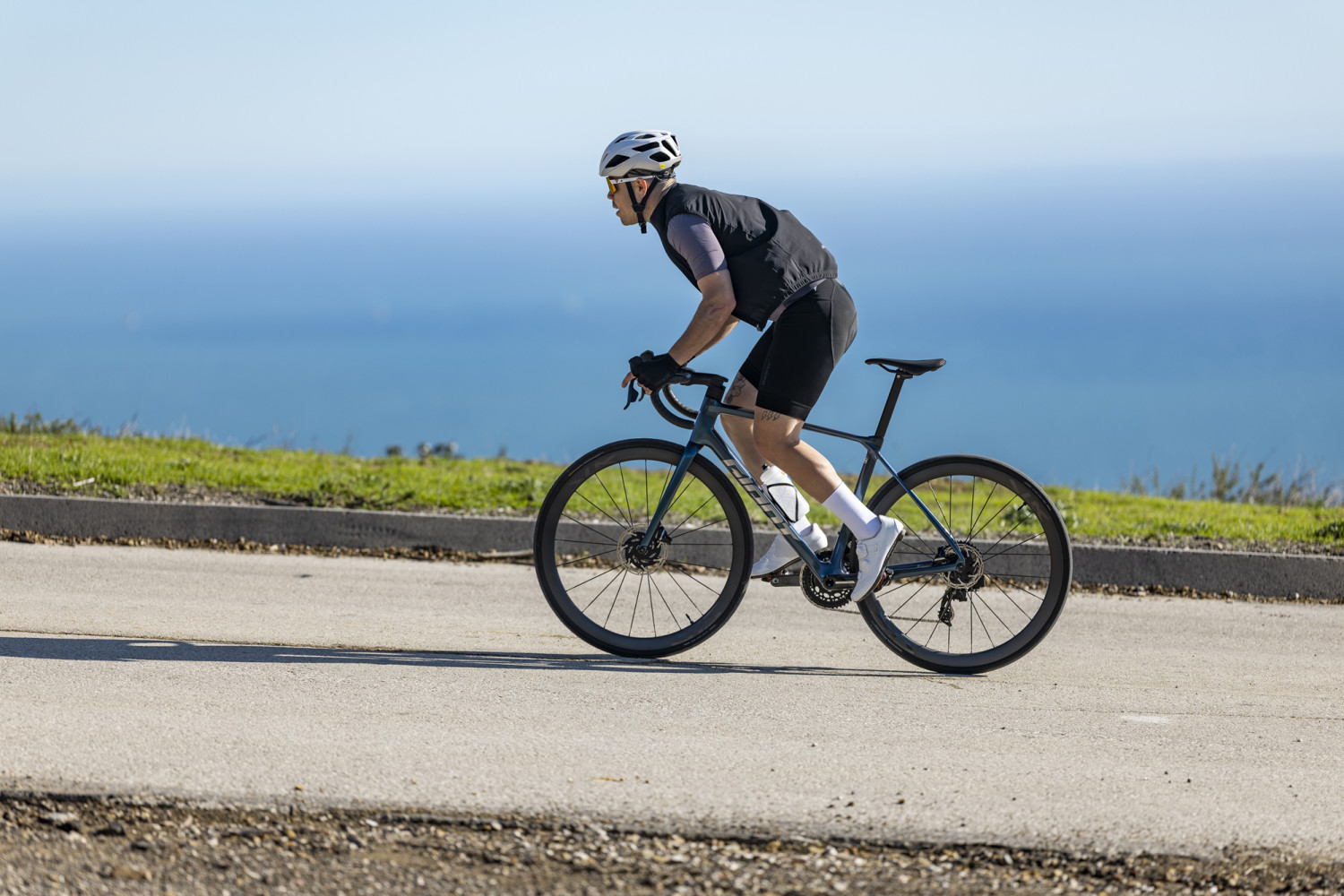
There are many road bike brands out there. So why choose Giant?
In short – Giant is the world’s largest bicycle manufacturer with an exceptionally wide range of models, and it is also among the leaders in cycling technology. Giant even produces bicycles for several other well-known brands.
1. Giant’s History – The Road to the Top
Giant’s history goes back more than 50 years – Giant Manufacturing Co. Ltd. was founded in 1972.
Innovation at the forefront – Giant was one of the first major brands to recognize the potential of carbon fiber. In 1997, they launched the Cadex series – one of the first full-carbon road bike frames available to everyday riders. This marked a turning point: carbon bikes were no longer the privilege of professional teams only.
In the 2000s, Giant introduced its Compact Road Design geometry, developed by renowned bicycle engineer Mike Burrows. The goal was to shorten the seat tube and make the frame more compact, resulting in a lighter, stiffer, and more responsive bike.
Giant in Professional Cycling
Giant has been an integral part of pro cycling since the 1990s, when they partnered with the Spanish Team ONCE. This collaboration marked Giant’s first major entry onto the professional stage, with their bikes successfully used in both the Tour de France and the Vuelta a España, achieving stage victories and high overall standings. Later came a long partnership with the Dutch Rabobank team, which lasted nearly a decade.
One of the most notable partnerships was from 2014 to 2020, when Giant was the official equipment supplier for Team Sunweb (later Team DSM-Firmenich).
At the 2025 Tour de France, Team Jayco AlUla will be racing on Giant bikes.

2. Model Range – A Giant Road Bike for Everyone
One of Giant’s strengths is its wide selection of models, covering every road cycling need – from beginners to professionals, from short sprints to multi-day mountain tours.
The All-Rounder – TCR
The Giant TCR is one of the brand’s most famous and best-selling models. It is stiff and fast, but still comfortable. The TCR is perfect for riders who want a versatile road bike that performs well in every situation – on climbs, descents, and flat sections alike.
Its compact frame geometry, low weight, and excellent stiffness make it an ideal choice for:
- Climbers who value every saved gram,
- Racers who want a bike that responds instantly and holds speed,
- Dedicated riders who spend long hours training and want a reliable yet lightweight machine.
👉 The TCR is less suitable for those who prioritize maximum comfort and upright endurance geometry – in that case, the Giant Defy is a better fit. But if your goal is speed and control, the TCR is your ideal partner.
The TCR comes in three model families – Advanced, Advanced Pro and Advanced SL (super light) – delivering the perfect choice for ambitious riders and elite racers alike.
TCR Advanced – dedicated enthusiast
- Frame: Advanced-grade carbon.
- Groupset options: Mechanical or electronic (e.g. Shimano 105, 105 Di2).
- Wheels: Aluminium or entry-level carbon wheelsets.
- For whom? Ideal for the aspiring performance rider who wants a light and stiff bike at a reasonable price – perfect for training and first races.
TCR Advanced Pro – for serious rider
- Frame: Advanced-grade carbon with integrated cockpit.
- Groupset options: Ultegra Di2 or SRAM Force AXS.
- Wheels: Carbon wheelsets for improved speed and ride quality.
- For whom? Suited for experienced riders or active club cyclists seeking lower weight, better aerodynamics, and precise electronic shifting.
TCR Advanced SL – Giant’s elite level. The TCR Advanced SL is also ridden by professional teams.
- Frame: SL-grade carbon – lighter, stiffer, and hand-crafted.
- Groupset options: Top-level electronic shifting (Dura-Ace Di2, SRAM Red AXS), with SLR components.
- Wheels: Giant SLR or CADEX carbon wheels, often with aero profiles.
- For whom? For racers or passionate enthusiasts who value every second – on climbs, in sprints, and through corners.
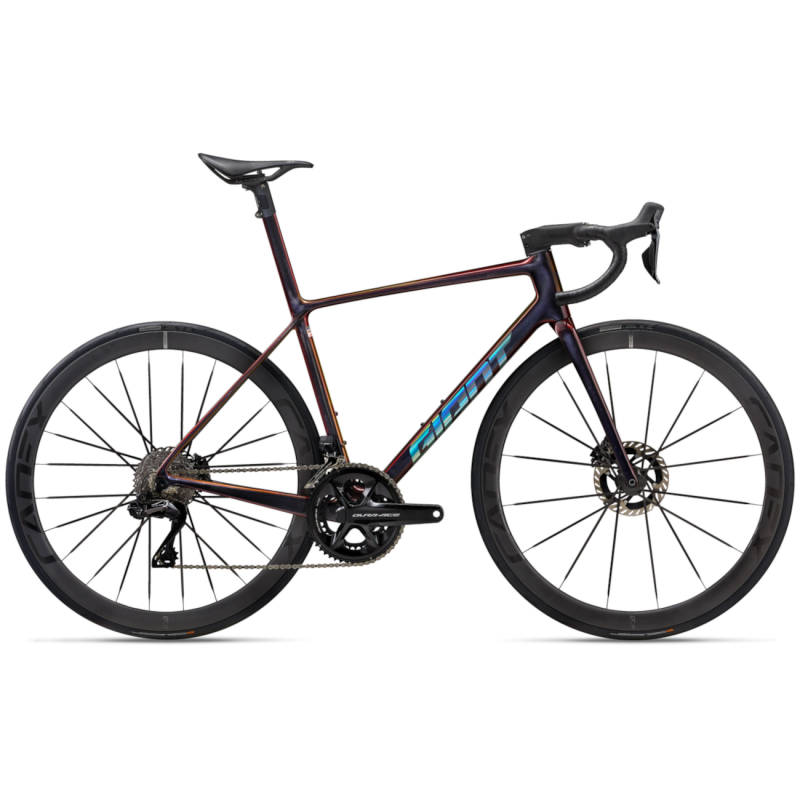
Defy – for the long-distance rider who values comfort
The Giant Defy is built for the endurance rider – those who prioritize comfort, stability, and reliability on long rides. It’s the perfect choice for enthusiasts who enjoy multi-hour training sessions, side roads bordering on gravel, or participating in Gran Fondo events. The Defy’s frame geometry provides a more relaxed riding position that reduces strain on the back and shoulders, while the carbon frame and integrated vibration-damping technologies deliver a smooth riding experience. The Defy Advanced comes equipped with comfort-focused components such as a softer saddle and wider tires.
Defy is especially well-suited for:
- Long-distance riders and endurance athletes who spend hours in the saddle;
- Beginners who want a lighter, more forgiving bike than a traditional race model;
- Those who value safety and control, especially thanks to hydraulic disc brakes and compatibility with wider, more comfortable tires.
The Defy is a trusted companion when your goal is not just to ride fast – but to go far, and to do it in comfort.
Defy Advanced, Pro and SL – what sets them apart and who are they for?
The Defy series consists of three model families – Advanced, Advanced Pro and Advanced SL – each designed for a different rider profile with its own technical features.
Defy Advanced – solid foundation for comfortable riding
- Frame: Giant Advanced-grade carbon.
- Groupset options: Mechanical or electronic (e.g. Shimano 105).
- Wheels: Aluminium or entry-level carbon with lower profile.
- For whom? Perfect for enthusiasts looking for a high-quality carbon bike at a reasonable price – a reliable choice for longer rides and training.
Defy Advanced Pro – for the rider who wants more
- Frame: Same carbon construction, upgraded with an integrated cockpit.
- Groupset options: Higher-level electronic shifting (e.g. Ultegra Di2, SRAM Rival AXS).
- Wheels: Lightweight carbon wheelsets offering smoother rolling and better vibration damping.
- For whom? Ideal for experienced enthusiasts or sporty riders who want a stiffer, lighter, and more responsive bike without stepping up to the flagship model.
Defy Advanced SL – uncompromising top level
- Frame: Giant SL-grade carbon – lighter, stiffer, and the brand’s premier endurance frame.
- Groupset options: Top-tier electronic drivetrains (e.g. Dura-Ace Di2, SRAM Red AXS).
- Wheels: High-tech aero carbon wheelsets.
- For whom? Aimed at ambitious riders and racers tackling gran fondos, endurance events, or simply those who want the ultimate blend of comfort and speed.
Who is the Giant Propel for? – speed, control, and precision everywhere
When speed is the top priority, the Giant Propel is the right choice. This is Giant’s aero road bike, with frame design and component integration optimized to minimize aerodynamic drag. The Giant Propel is the ideal bike for riders seeking maximum speed, especially on flat roads and long straight sections. It’s also a perfect choice for sprinters and triathletes.
The Giant Propel is best suited for:
- Competitive racers and triathletes who need a bike that maintains high speed without compromising ride feel or stability;
- Fast enthusiasts who prefer a riding style where every watt matters and every detail is fine-tuned to maximize performance;
- Riders who value precision and control, as the Propel offers confident and accurate handling even at high speeds.
The Propel comes in three levels – Advanced, Advanced Pro and Advanced SL:
Propel Advanced – aero at a reasonable price
- Frame: Giant Advanced-grade carbon with aerodynamic shaping.
- Groupset options: Shimano 105 or 105 Di2 / SRAM Rival AXS.
- Wheels: Aluminium or entry-level carbon wheelsets.
- For whom? For enthusiasts who want the benefits of aero performance in training and group rides, without needing top-tier components or the lightest frame.
Propel Advanced Pro – balance of aerodynamics and precision
- Frame: Giant Advanced-grade carbon with integrated cockpit.
- Groupset options: Shimano Ultegra Di2 or SRAM Force AXS.
- Wheels: Giant SLR carbon wheelsets – aerodynamic, lightweight, and stiff.
- For whom? For sporty riders or club racers who want to maximize aerodynamics and precision on longer rides and in competition.
Propel Advanced SL – uncompromising speed
- Frame: SL-grade carbon – lighter, stiffer, and hand-crafted, the same frame used by Giant’s WorldTour team.
- Groupset options: Shimano Dura-Ace Di2 or SRAM Red AXS.
- Wheels: CADEX or Giant SLR 1 Aero carbon wheelsets.
- For whom? For serious racers or triathletes who value every watt and every second – the Propel SL is built to win.
Who is the Giant Contend (aluminium road bike) for?
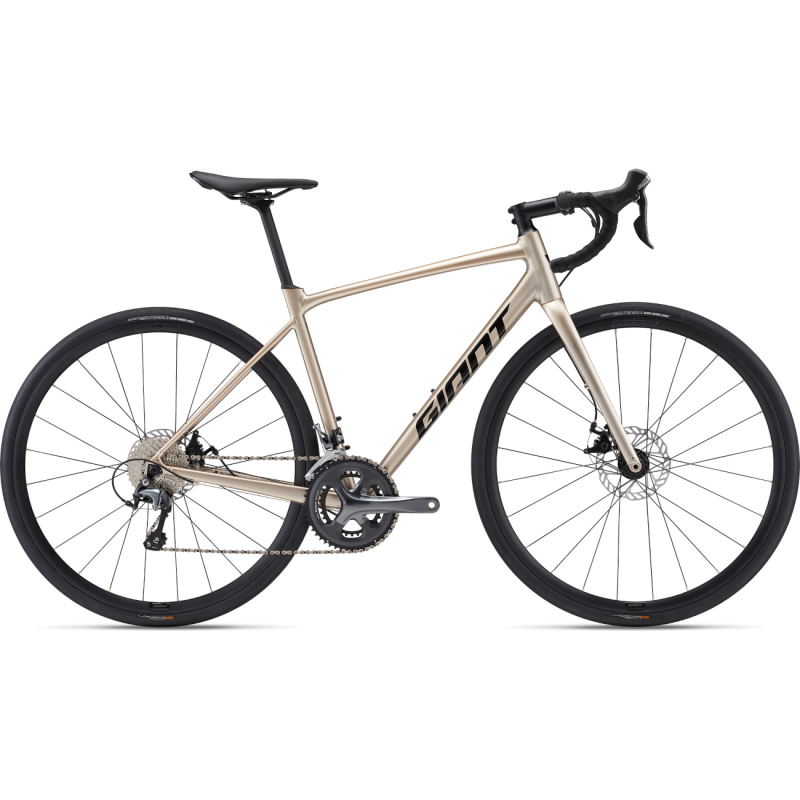
The Giant Contend is the perfect choice for those looking for their first quality road bike. It’s an excellent option for beginners and intermediate riders who value a balance between comfort and stability. The Contend offers a budget-friendly way to enjoy a bike that’s ready for both long training rides and relaxed cruising.
The Giant Contend is well-suited for:
- Beginners and intermediate enthusiasts seeking a bike that is lightweight, durable, and affordable;
- Everyday riders who enjoy local roads, gravel or paved routes, and need a reliable bike that can handle mixed surfaces;
- Training riders who are just starting road cycling or want to increase their mileage and take the next step;
- Gravel fans who don’t limit themselves to asphalt and occasionally ride light off-road sections, as the Contend is versatile enough for rougher roads.
Liv – everything Giant offers, designed specifically for women, all the way to the top level
Liv is a dedicated product line for women, featuring frame geometry, components, and design tailored to the female body and riding style.
Liv is a sub-brand of Giant that focuses exclusively on women’s bicycles. Every Liv road bike is designed with women’s body proportions and ergonomics in mind – they are not just smaller versions of men’s models.
Liv offers several road bike series, corresponding to Giant’s lines but with different target riders and geometry:
Liv Langma = Giant TCR
The Langma is Liv’s top-level race bike – lightweight, stiff, and with an aggressive geometry. It’s designed for racers seeking efficiency on climbs and a bike with quick responsiveness. The Langma is available in Advanced, Pro, and SL versions like the TCR, using the same carbon frame technology but with dimensions better suited to women’s ergonomics (e.g., narrower handlebars, shorter frame).
Liv Avail = Giant Defy
The Avail is aimed at long-distance and comfort-oriented rides. With a more relaxed riding position, increased tire clearance, and a frame with excellent vibration damping, it’s ideal for riders who enjoy long rides or Gran Fondo-style events. Like the Defy, the Avail comes in different classes (Advanced, Pro), but its geometry is optimized for a woman’s body.
Liv Thrive = Giant FastRoad
The Thrive is a hybrid for city riding and training, featuring a flat handlebar but derived from a lightweight road bike frame. It combines road-bike speed with the comfort of a city/training bike. Perfect for the active woman seeking versatility and a sporty feel without a road-bar setup.
3. Which Components Define a Road Bike’s Level?
Aluminum vs. Carbon Frames
When choosing a road bike, many face the question: should you go for an aluminium frame, which is often more affordable and durable, or a carbon frame, which is lighter and more comfortable but also more expensive? Both have clear advantages depending on your intended use and riding expectations.
An aluminium frame is suitable for you if:
- You are a beginner or recreational rider looking for a budget-friendly option;
- You need a reliable everyday bike that can withstand tougher conditions and weather;
- You want a versatile bike – for example, for training, city riding, and touring;
- You don’t want to worry about potential frame damage.
A carbon frame is suitable for you if:
- You are an advanced rider or athlete seeking stiffness and the lightest possible weight;
- You often ride long distances and every detail matters;
- You are ready to invest in a more expensive, high-end bike;
- You want the added motivation of top-level equipment for your training.
| Feature | Aluminium Frame | Carbon Frame |
| Price | More affordable | Significantly more expensive |
| Weight | Slightly heavier | Lighter |
| Comfort | Softer, less vibration | Stiff |
| Durability | Durable, resists scrathces | More delicate, sensitive to impacts |
| Best suited for | Beginners, everyday riders | Advanced riders, racing |
Which level of groupset suits which type of rider?
A road bike groupset – the shifting and braking system (including derailleurs, shifters, chain, cassette, and crankset) – is one of the most important components that affect a bike’s weight, reliability, and price. Depending on your level and goals, it’s worth choosing the right groupset to support your riding style and preferences.
Beginner and everyday rider
- Recommended groupset: Shimano Claris, Sora, or Tiagra / SRAM Apex.
- Why? These entry-level groups are reliable, accurate enough, and affordable. An ideal choice for those starting their road cycling journey or needing a bike for daily use.
Intermediate enthusiast
- Recommended groupset: Shimano 105 or 105 Di2 / SRAM Rival AXS.
- Why? A great balance of price, weight, and functionality. Offers the option of electronic shifting at a more accessible cost. Suitable for riders who train regularly and want reliability in every situation.
Experienced rider and racer
- Recommended groupset: Shimano Ultegra or Ultegra Di2 / SRAM Force AXS.
- Why? Precise, lightweight, and fast shifting – very close to top-level groups but slightly more affordable. Perfect for active training, gran fondos, and racing.
Top-level enthusiast and competitive racer
- Recommended groupset: Shimano Dura-Ace Di2 / SRAM Red AXS.
- Why? Cutting-edge technology, minimal weight, and ultra-precise electronic shifting. A premium setup that stays top-performing throughout its lifespan. If compromise is not an option and the goal is the best possible riding experience – this is the choice.
Summary: Choose your groupset based on how much you ride and what you expect from your bike. There’s no need to over-invest as a beginner, but as you progress, upgrading components according to your needs makes sense.
And should you choose electronic shifting?
Electronic shifting is rapidly becoming the new standard among both professional and recreational cyclists, offering greater precision, reliability, and easier maintenance compared to mechanical systems. Its biggest advantage is faster, smoother, and more effortless gear changes.
You may want to prefer an electronic system if:
- You ride regularly and a lot, and value convenience and minimal maintenance – once adjusted at the start of the season, you rarely need to think about it again;
- You participate in races or group rides, where fast and flawless shifting can give you an edge;
- You want modern technology that often allows smartphone connectivity, battery-level monitoring, and customization.
That said, a mechanical system can still be the better choice for those who want simplicity, lower cost, and the ability to maintain it themselves – especially on tours or long-distance rides where fixing electronic issues could be challenging.
In summary: if you want maximum comfort, precision, and the latest technology – go for electronic shifting. If you value simplicity, dependability, and a lower price – stick with mechanical.
Who needs deep-section/aero wheels and why?
Aero wheels (deep-section carbon rims) are designed for riders who want more speed and efficiency, especially on flatter terrain, in races, and in triathlons. Their deeper, more aerodynamic profile reduces drag, allowing the rider to maintain higher speeds with less effort – with the biggest benefits noticeable at speeds above 30 km/h.
Riders who benefit the most from deep-section aero wheels include:
- Racers who are chasing every second and want maximum aerodynamic advantage;
- Triathletes, for whom maintaining speed on flat roads is critical;
- Experienced enthusiasts who ride a lot on flat routes and want to go faster with less energy expenditure.
However, deep-section wheels are not always the best choice:
- They are heavier, which makes them less ideal for technical or hilly courses;
- Crosswinds can affect stability, which may be challenging for lighter riders;
- For riders under ~50 kg, a better upgrade could be to high-quality, lightweight low-profile carbon wheels instead.
Choosing the right wheelset depends on your weight, riding style, and typical terrain. For the right rider, aero wheels can offer a clear advantage – especially where speed matters most. On our local roads, we can confidently recommend modern aero wheels, as the latest wide and deep carbon rims are stable enough to handle even strong spring winds.